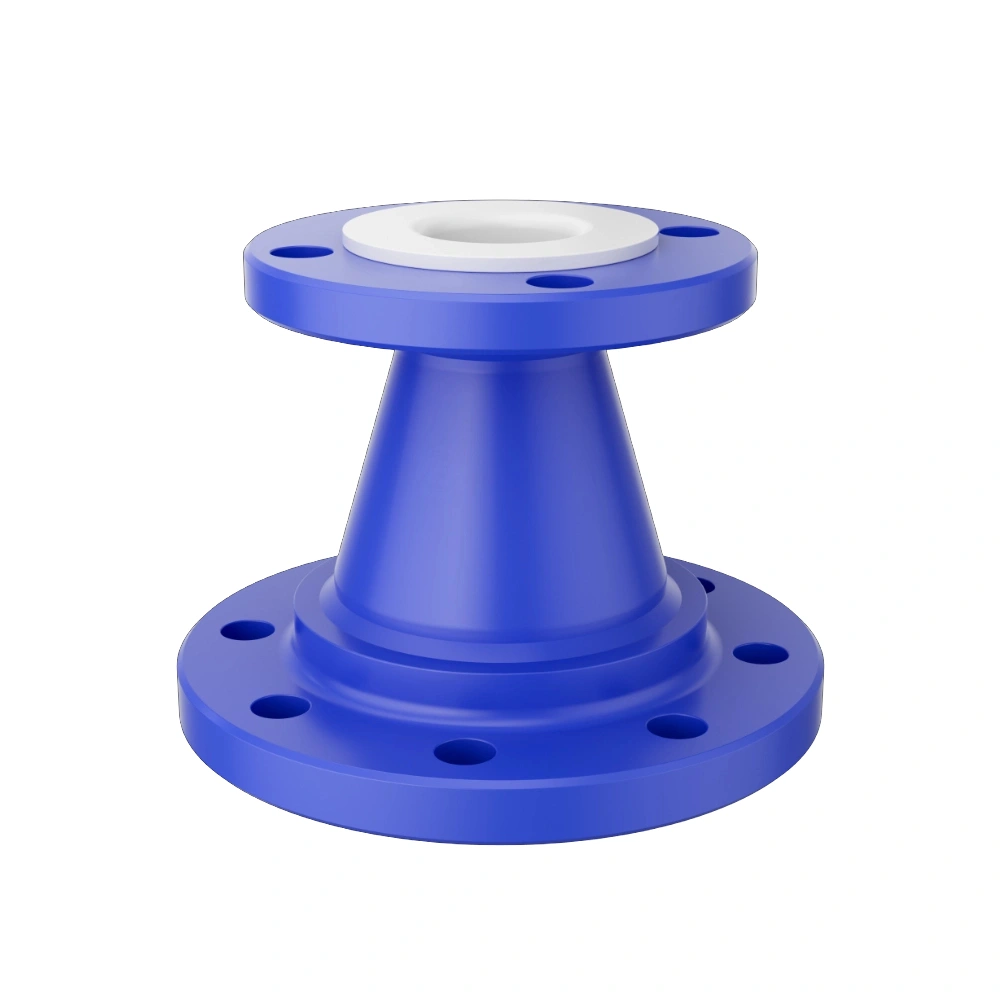
PTFE & PFA Lined Concentric Reducers | Fluoropolymer Lined Fittings
Product Information
Size:
DN15~DN1200
Pressure:
PN10, PN16, 150LB
Material:
A106 Gr.B, A53 Gr.B, 304, 316, 316L
Liner:
PTFE, PFA
Face-to-face dimension:
As per MTO


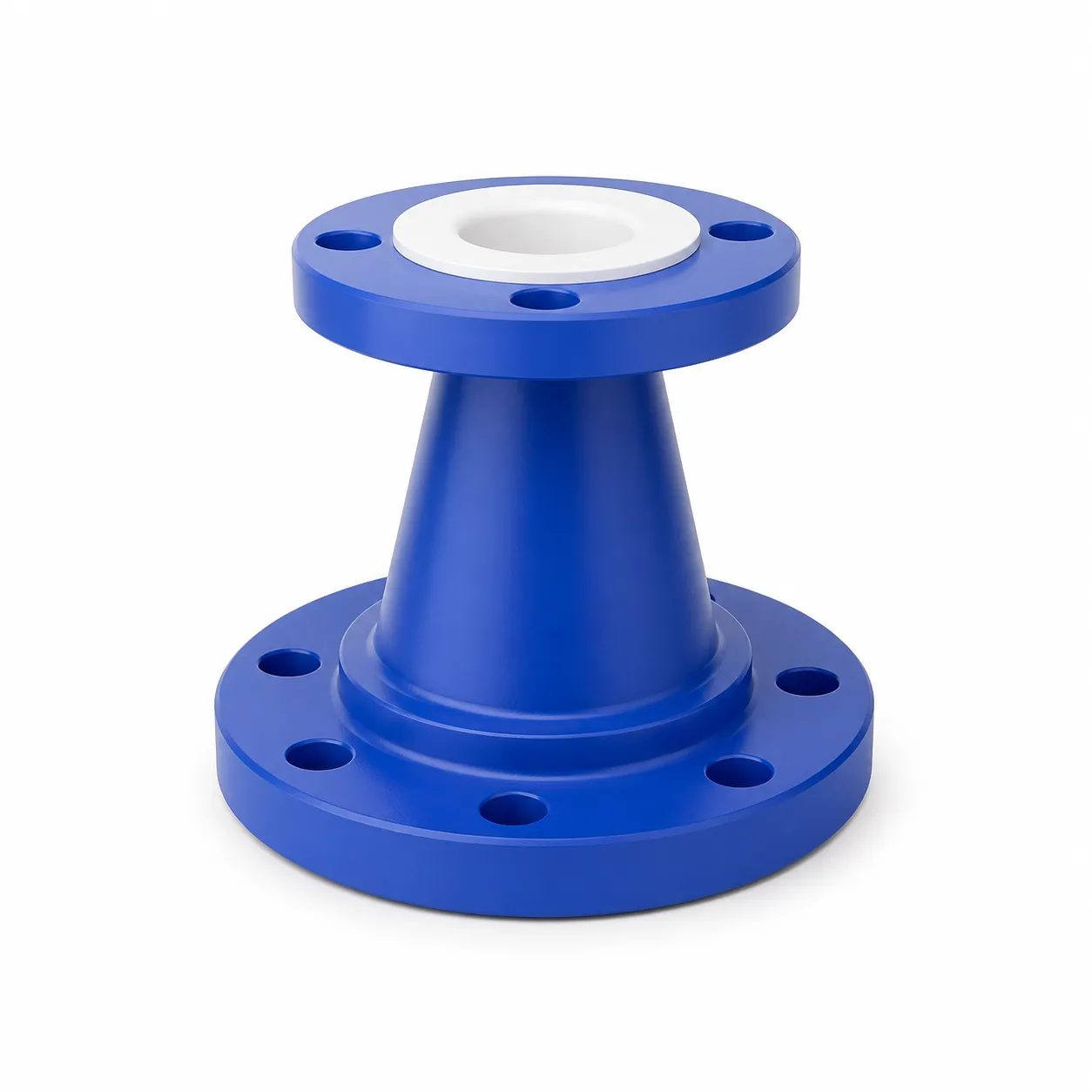
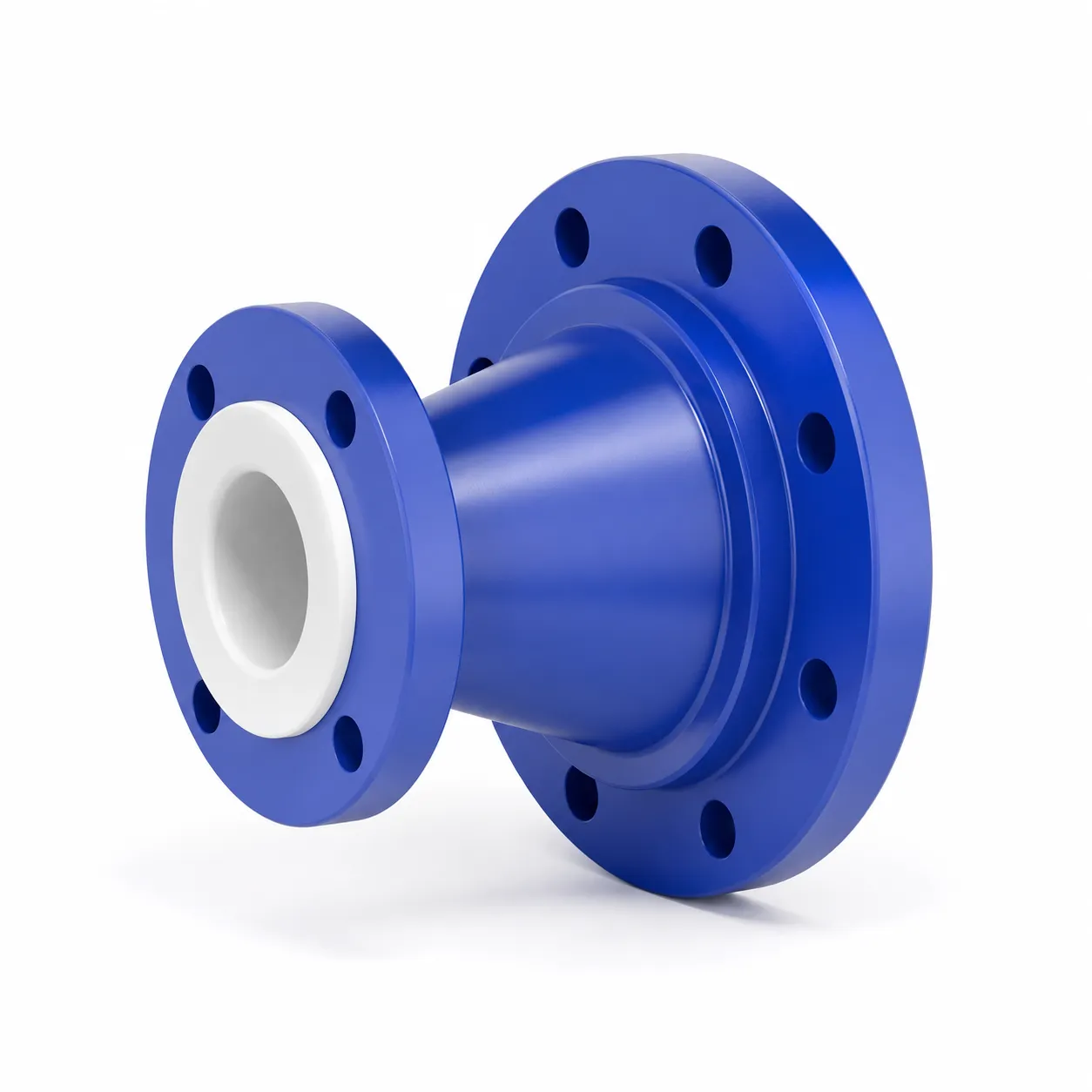
The PTFE/PFA lined concentric reducer is a symmetrical piping component designed to connect two collinear pipelines of differing nominal diameters. Unlike eccentric models which feature an offset alignment, the concentric reducer transitions uniformly around a shared central axis, utilizing a balanced, cone-shaped geometry.
This structural layout is primarily deployed in vertical process lines and inline configurations to achieve smooth transitions in flow velocity. By eliminating sharp internal flow restrictions, the symmetrical taper facilitates a gradual acceleration or deceleration of aggressive chemicals. This design minimizes internal fluid shear stresses, reduces pressure drop gradients, and lowers backpressure variations, protecting the structural integrity of sensitive inline instruments and processing equipment.
Material Substrates and Lining Process Control
Carbon & Stainless Steel Outer Casing
The outer metallic structural shell absorbs external mechanical piping loads, high pressure thrusts, and systemic thermal stresses. The pressure boundary housing complies with standard global refinery and chemical procurement specifications:
-
ASTM A234 Grade WPB: Standard carbon steel grade for structural piping fittings, delivering excellent tensile properties and mechanical reliability under continuous load.
-
ASTM A106 Grade B / ASTM A53 Grade B: Seamless carbon steel substrates utilizing heavy-wall parameters for standard hazardous chemical process lines.
-
ASTM A312 Grade 304 / 316 / 316L: Austenitic stainless steel options engineered for cleanrooms, sterile pharmaceutical operations, or aggressive environments exposed to external marine corrosion and ambient oxidation.
Advanced Fluoropolymer Linings (PTFE & PFA)
The choice of the internal polymer boundary depends directly on chemical compatibility, continuous temperature levels, and vacuum operational limits:
-
Virgin PTFE (Polytetrafluoroethylene): Provides total chemical resistance across the complete 0–14 pH scale. Its naturally low friction coefficient prevents product buildup, crystallization, or media scaling along the sloped cone section.
-
Melt-Processable PFA (Perfluoroalkoxy Alkane): Recommended for severe operations involving continuous thermal-vacuum cycling. PFA exhibits superior melt-flow processability, ensuring absolute lining thickness uniformity across the tapered conical transition and intersecting flange components.
Manufacturing Methodologies for Symmetrical Conical Geometries
-
High-Density Molding Processing: Because concentric reducers feature a uniform conical path, specialized automated high-pressure transfer molding or isostatic molding techniques are applied. This process compresses the fluoropolymer matrix evenly against the tapered steel shell, ensuring zero micro-porosity, uniform wall thickness, and zero stress concentrations at the diameter transitions.
-
High Permeation Resistance: The compressed molecular configuration of the lining limits free interstitial space, preventing volatile chemical vapors and low-molecular-weight acid gases from diffusing through the lining to attack the outer steel shell.
-
Vacuum Integrity Protection: The lining is mechanically anchored into precisely machined internal locking grooves or stabilized via external casing vent holes, preventing liner collapse, buckling, or thermal-vacuum separation under negative pressure shifts.
Technical Parameters & Standards Compliance
To ensure seamless integration into international engineering procurement frameworks and automated chemical manifold setups, all design and testing workflows conform to global compliance metrics:
System Performance Specifications
-
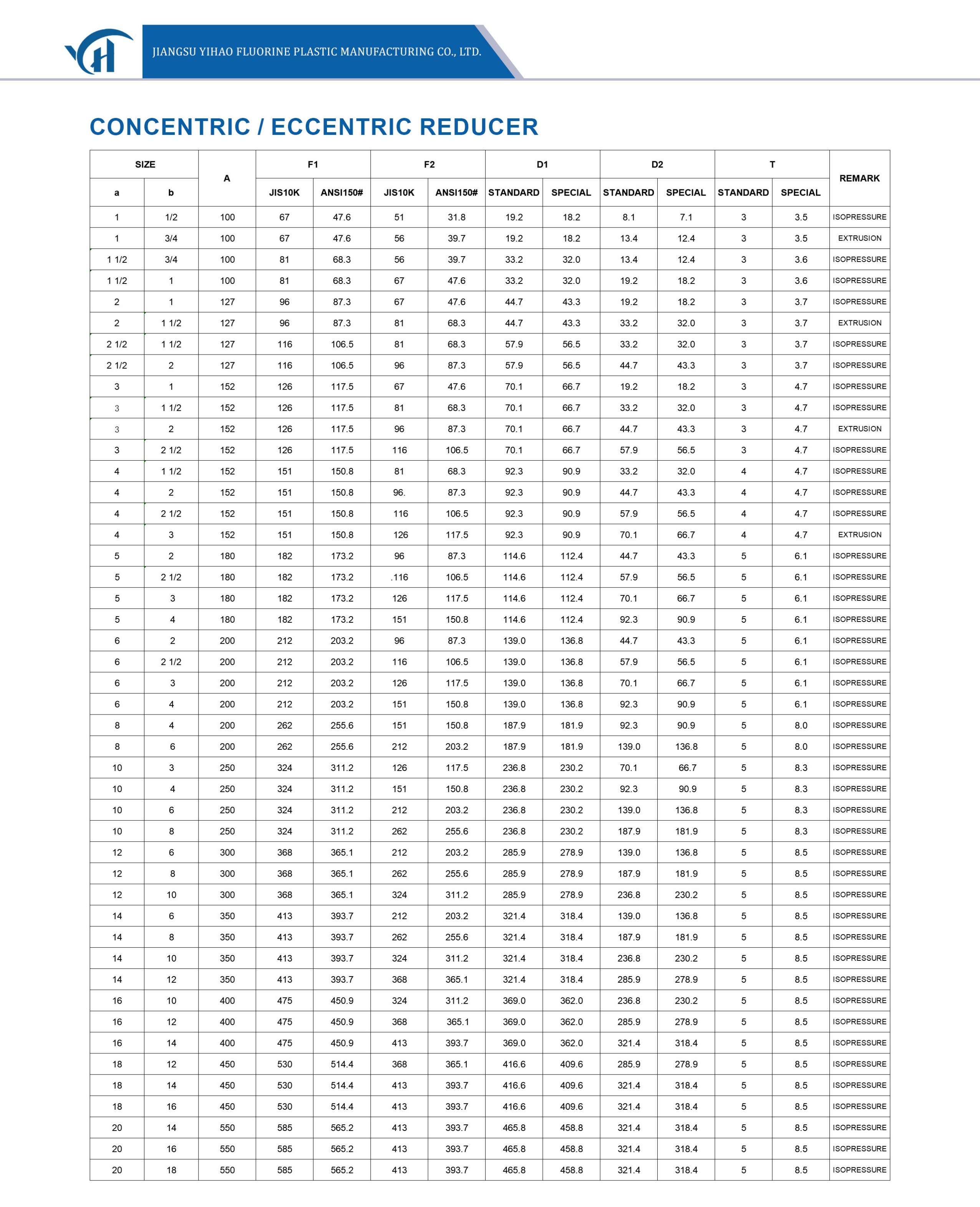
Nominal Size Spectrum: DN15 to DN1200 (1/2" up to 48" nominal diameter, supporting high-to-low diameter combinations).
-
Pressure Class Compatibility: PN10, PN16, and ASME Class 150 (150LB).
-
Face-to-Face Dimensions: Standard dimensions conforming to industry specifications, or custom manufactured to match precise project Material Take-Off (MTO) and isometric design blueprints.
Applicable Engineering Standards
-
Design & Fitting Specifications: ASTM F1545 (Standard Specification for Plastic-Lined Ferrous Metal Pipe and Fittings).
-
Flange Attachment & Dimension Standards: ASME B16.5, EN1092-1, DIN 2501, HG/T 20592, JIS 10K.
-
Face-to-Face Core Dimensions: Conforming to ASME B16.10, GB/T 12221, or specialized customer layout configurations.
Primary Cross-Industry Applications
The symmetrical flow path and absolute chemical isolation of these PTFE/PFA lined concentric reducers make them critical components across multiple industrial sectors:
-
Chemical Process Industries (CPI): Inline vertical flow transitions for transferring raw bulk acids, including concentrated sulfuric, hydrofluoric, hydrochloric, and nitric acids, where gradual velocity changes are preferred.
-
Chlor-Alkali Infrastructure: Positioned in manifold networks handling concentrated sodium hydroxide (caustic soda), wet chlorine gases, and highly corrosive brine processing lines.
-
Pharmaceutical and Biochemical Manufacturing: Symmetrical process reduction points that support stable flow dynamics, clean fluid transitions, and complete compatibility with Clean-in-Place (CIP) sanitization cycles.
-
Semiconductor & Electronics Chemical Supply: Interconnecting manifolds for ultra-pure electronic-grade chemical etching solutions and aggressive organic solvents, ensuring zero micro-contamination or metal ion extraction occurs along the diameter transition.
-
Petroleum Refining & Petrochemicals: Deployed within hydrocarbon streams containing hydrofluoric acid alkylation units, sour water strippers, and toxic catalyst loop systems.
-
Industrial Wastewater & Mining Leaching: Vertical routing of aggressive industrial wastewater, chemical effluent processing, and acid-leaching lines where fluid turbulence must be restricted.
Comprehensive Quality Management & Testing Verification
To ensure zero-leak operations, process fluid containment, and long-term structural alignment stability, every concentric lined reducer undergoes strict quality control validation before shipment:
-
Electrostatic Spark Testing (Non-Destructive): 100% of the internal sloped polymer lining and both the large and small flange faces are tested using high-voltage spark testing equipment (10kV to 25kV based on lining thickness) to guarantee the absolute absence of pinholes, micro-voids, or structural cracks.
-
Hydrostatic Pressure Testing: Mechanical pressure containment verification is executed in strict compliance with API 598, ASTM F1545, or GB/T 13927 standards to guarantee total seal integrity under continuous service loads.
-
Visual and Dimensional Alignment Audit: A precise inspection of the conical profile symmetry, flange face parallelism, concentricity alignment, and total dimensional conformity relative to the project MTO configuration data.
Recommended products
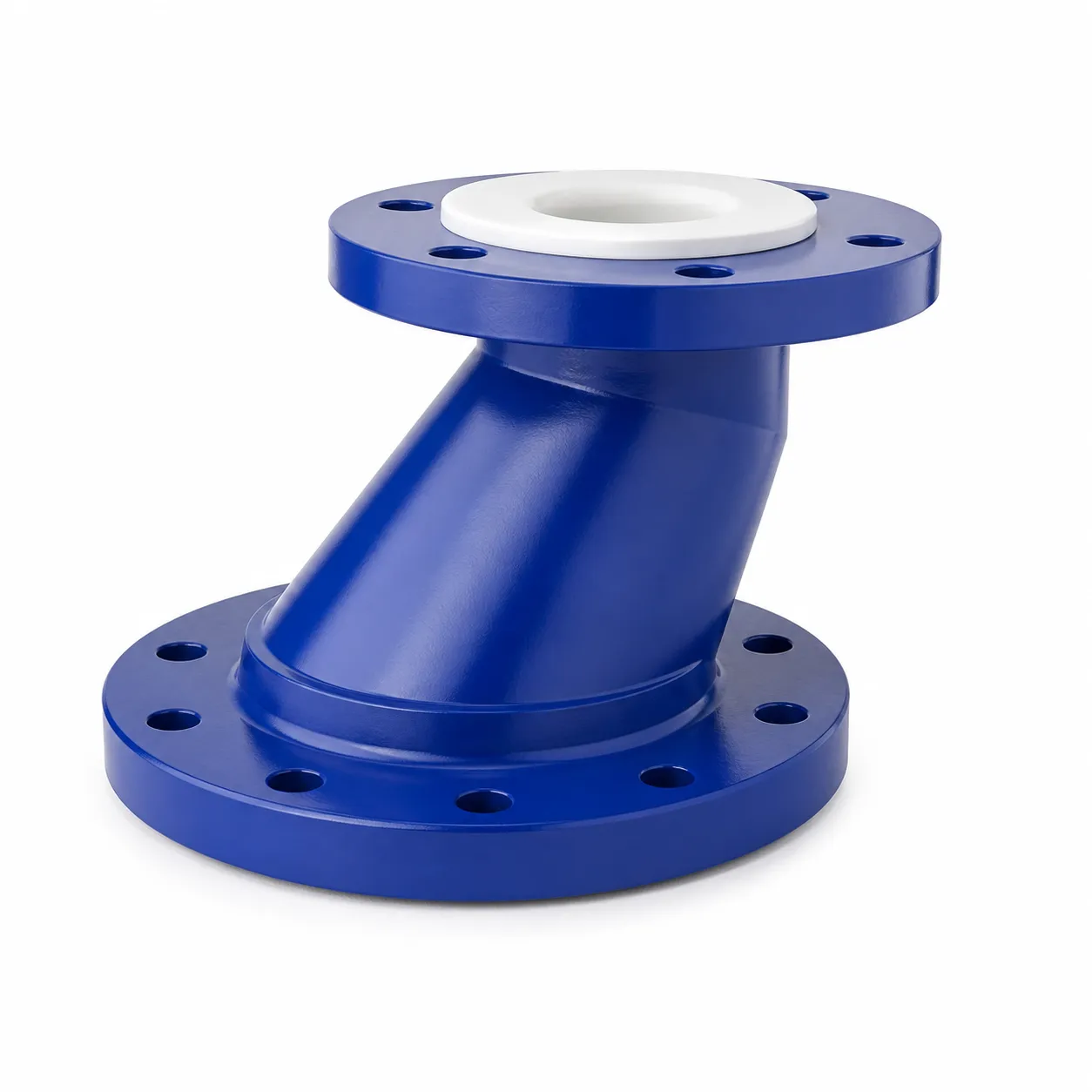
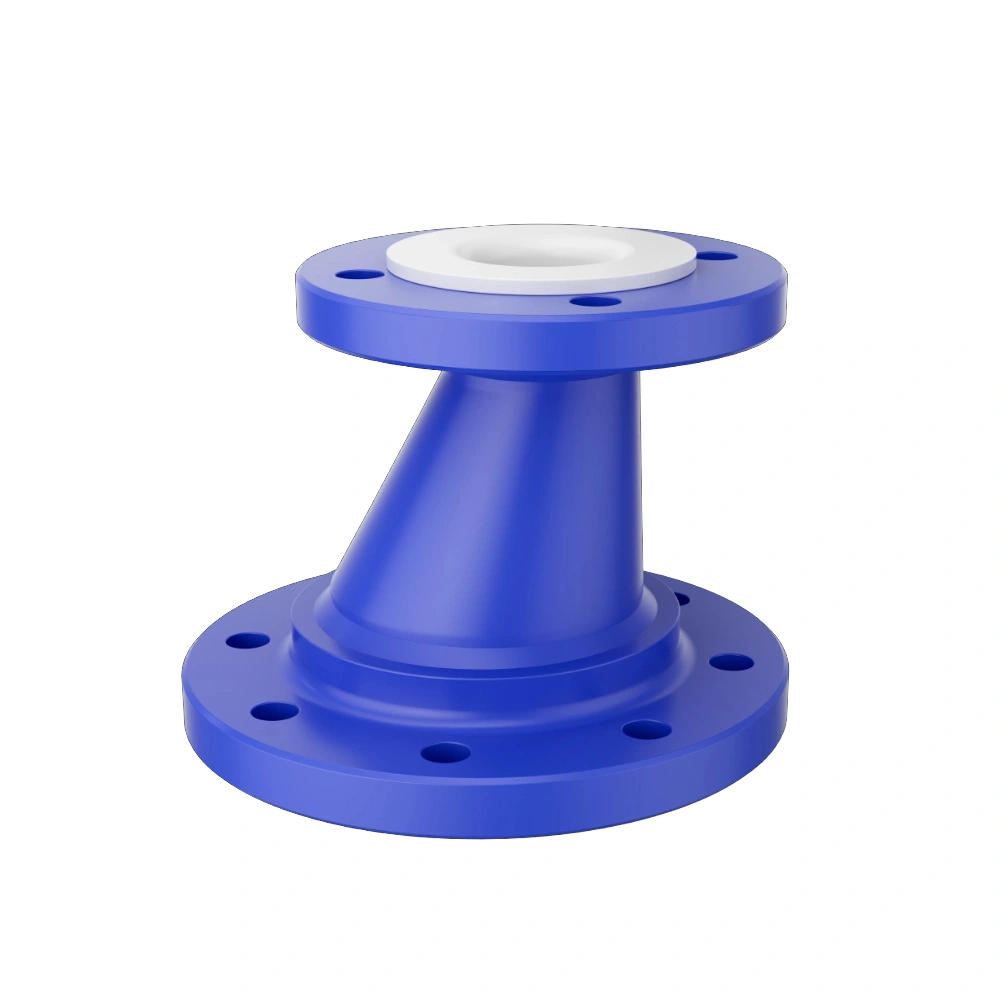
PTFE-Lined Eccentric Reducers | Corrosive-Resistant Pipeline Reducers
Heavy-duty industrial steel eccentric reducers fully lined with virgin PTFE or PFA. Ideal for horizontal pipeline transitions, vapor pocket elimination, and corrosive fluid systems.
PTFE-Lined Concentric Reducers | Flanged Corrosion-Resistant Pipe Reducers
Heavy-duty industrial steel concentric reducers fully lined with virgin PTFE or PFA. Ideal for transitioning pipe diameters in corrosive chemical processing systems.
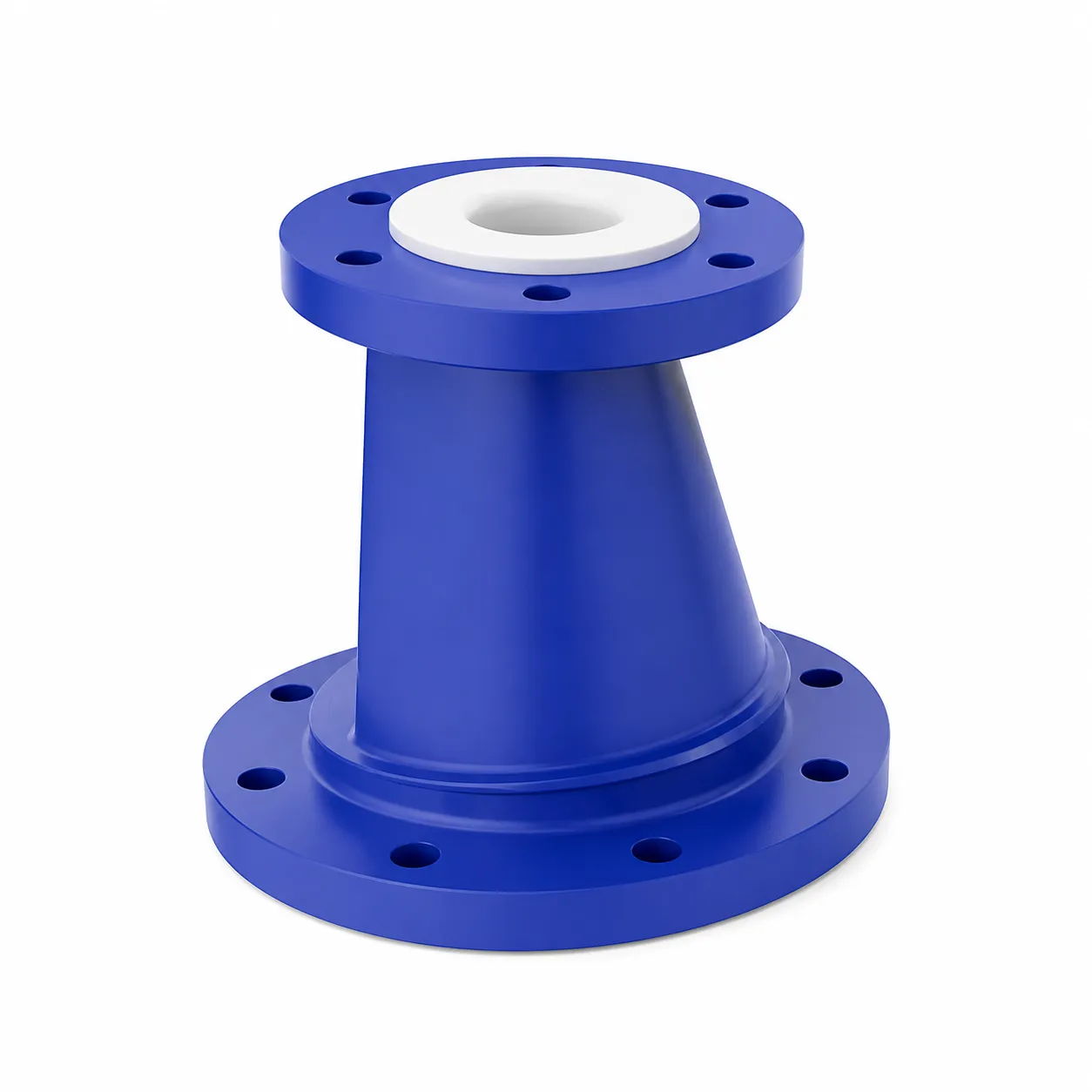
PTFE & PFA Lined Eccentric Reducers | Corrosion-Resistant Piping
Premium PTFE and PFA lined eccentric steel reducers (DN15-DN1200). Engineered for horizontal corrosive lines to prevent fluid entrapment and pump cavitation.


