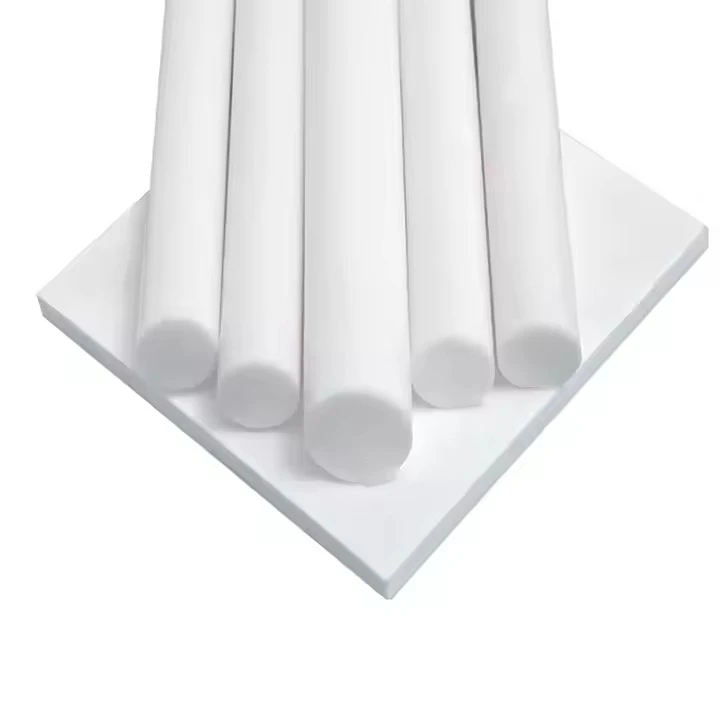
Virgin PTFE & PFA Rods | High-Density Fluoropolymer Bars


Engineered to serve as high-grade machining stock for structural components, these solid round bars are produced via continuous ram extrusion or high-pressure compression molding.
Unlike hollow tubes or flat sheets, industrial Rods are selected primarily for their exceptional mechanical machinability and internal cross-sectional uniformity. They provide global engineering workshops with the ideal, zero-void solid substrate required to machine high-precision components—such as ball valve seats, chemical pump impellers, semiconductor insulators, electrical connectors, and diagnostic sampling manifold cores—where complete chemical isolation and geometric stability are critical.
Manufacturing Classifications and Material Profiles
Technical Distinctions by Production Method
To balance dimensional scale with structural density requirements, our fluoropolymer round bars are classified into two distinct production formats:
-
Extruded PTFE/PFA Rods (Small to Medium Diameters): Processed via automated continuous ram extrusion setups. This methodology aligns the polymer chains consistently, delivering tight outer diameter (OD) tolerances and exceptional straightness profiles optimized for high-speed automatic Swiss lathe operations.
-
Molded PTFE/PFA Bars (Large Diameters): Fabricated through individual vertical compression molds followed by precision-controlled thermal sintering cycles. This method eliminates localized internal stresses and micro-porosity, yielding large-diameter billets with uniform isotropic physical properties throughout the entire core.
Material Resins Selection
-
Virgin PTFE Round Rods: Provides universal chemical resistance across the continuous 0–14 pH scale and exhibits a minimal friction coefficient. It retains its physical toughness and flexural properties across a broad operational thermal boundary from -180°C up to +260°C.
-
Melt-Processable PFA Round Rods: Recommended for ultra-high purity component machining or systems experiencing high mechanical stress at elevated temperatures. PFA bars provide superior clarity, higher tensile strength, exceptional resistance to environmental stress-cracking, and a denser molecular matrix that limits molecular permeation.
High-Performance Features & Machining Advantages
-
Excellent Machining Lathe Compliance: The dense, uniform internal structure permits clean chip formulation and high surface finishes during high-precision turning, milling, drilling, and thread-cutting procedures.
-
Zero Contamination Seeding: Fabricated from 100% pure virgin resins without added fillers or recycled scrap, ensuring zero metal-ion leaching or volatile organic compound (VOC) outgassing in electronic-grade processes.
-
Advanced Dielectric Strength: Exceptional volumetric resistivity and low dielectric constants make these bars highly reliable when machined into high-frequency insulation components, spark plugs, and sensor housings.
-
Self-Lubricating Matrix: The naturally low surface tension minimizes kinetic friction, reducing physical wear and eliminating the need for external lubricating oils when used as dynamic bushings or slide pins.
Primary Cross-Industry Applications
-
Chemical & Fluid Handling Equipment: Carved into internal packing glands, valve plugs, seals, back-up rings, and mechanical gaskets for systems routing concentrated acids and corrosive industrial fluids.
-
Semiconductor Wet-Process Tools: Machine-tailored into chemical delivery blocks, sensor fittings, and substrate supports inside acid-washing rooms where absolute structural purity is mandated.
-
Electrical & Telecommunications Infrastructure: Utilized as raw bar stock for fabricating high-voltage insulation stand-offs, coaxial cable connectors, and microwave-frequency antenna insulators.
-
Laboratory & Medical Diagnostic Instrumentation: Machined into highly precise fluidic manifold blocks, automated syringe pump pistons, and testing vial adapters to prevent chemical cross-contamination.
-
Mechanical & Heavy Structural Engineering: Turned into low-friction guide rollers, heavy-load mechanical bushings, and non-marring scraper blades exposed to abrasive or high-heat environments.
Comprehensive Quality Auditing & Integrity Controls
To guarantee that machined parts remain structurally integral and defect-free under critical pressure or chemical loads, our rod production line undergoes rigorous testing:
-
Internal Void Acoustic/Visual Verification: 100% inspection profiles over extruded and molded bars to detect internal core voids, air bubbles, carbon inclusion defects, or micro-cracks before dispatch.
-
Outer Diameter Tolerance & Concentricity Audit: Continuous caliper or laser micrometer cross-checks ensure tight cylindrical geometry, enabling trouble-free clamping inside automated bar-feeders.
-
Density and Tensile Performance Checks: Specific gravity assessments confirm complete resin sintering and material compaction, ensuring uniform mechanical strength across both the longitudinal and radial cutting axes.
Recommended products
Recommended products


