Product Introduction
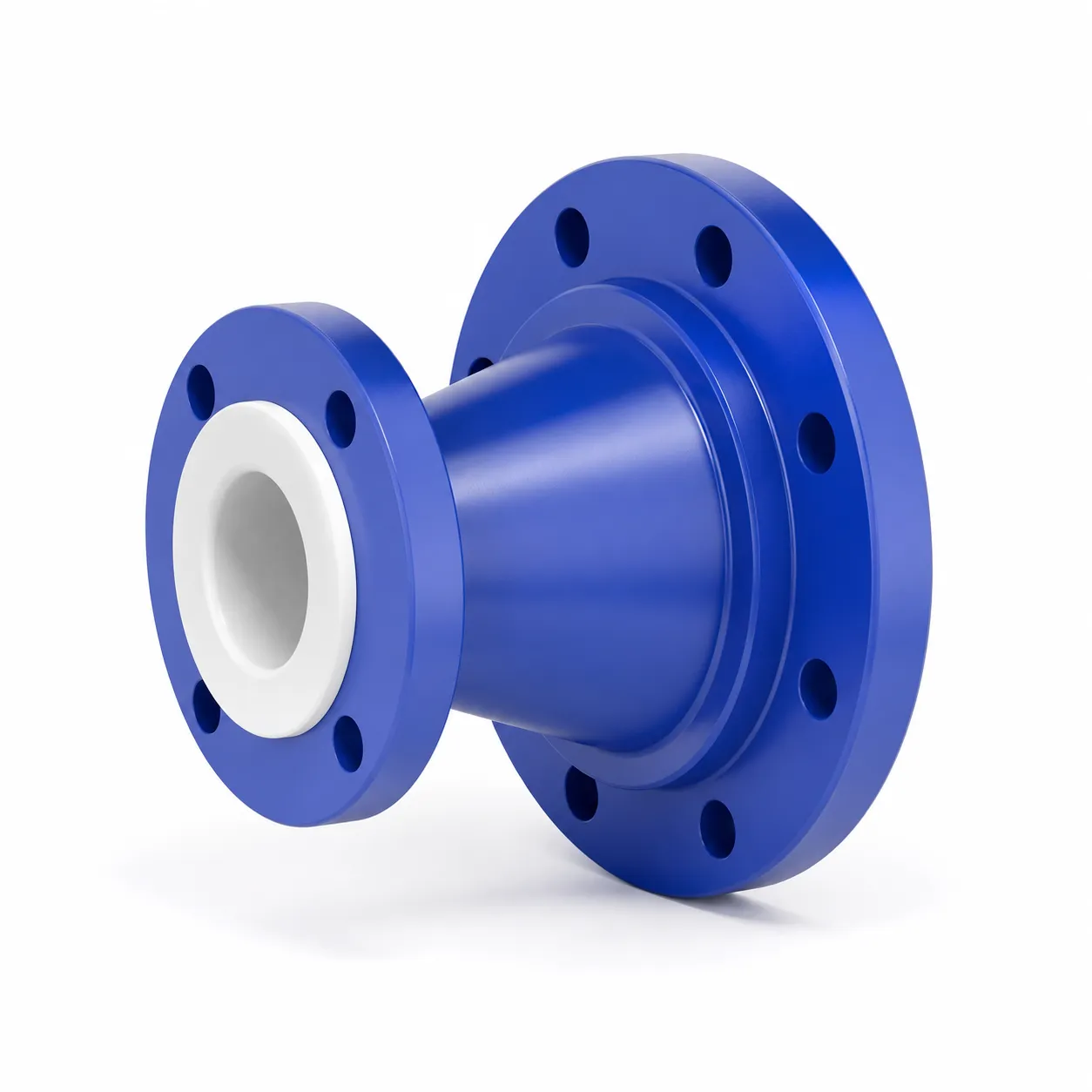
Premium PTFE and PFA lined eccentric steel reducers (DN15-DN1200). Engineered for horizontal corrosive lines to prevent fluid entrapment and pump cavitation.
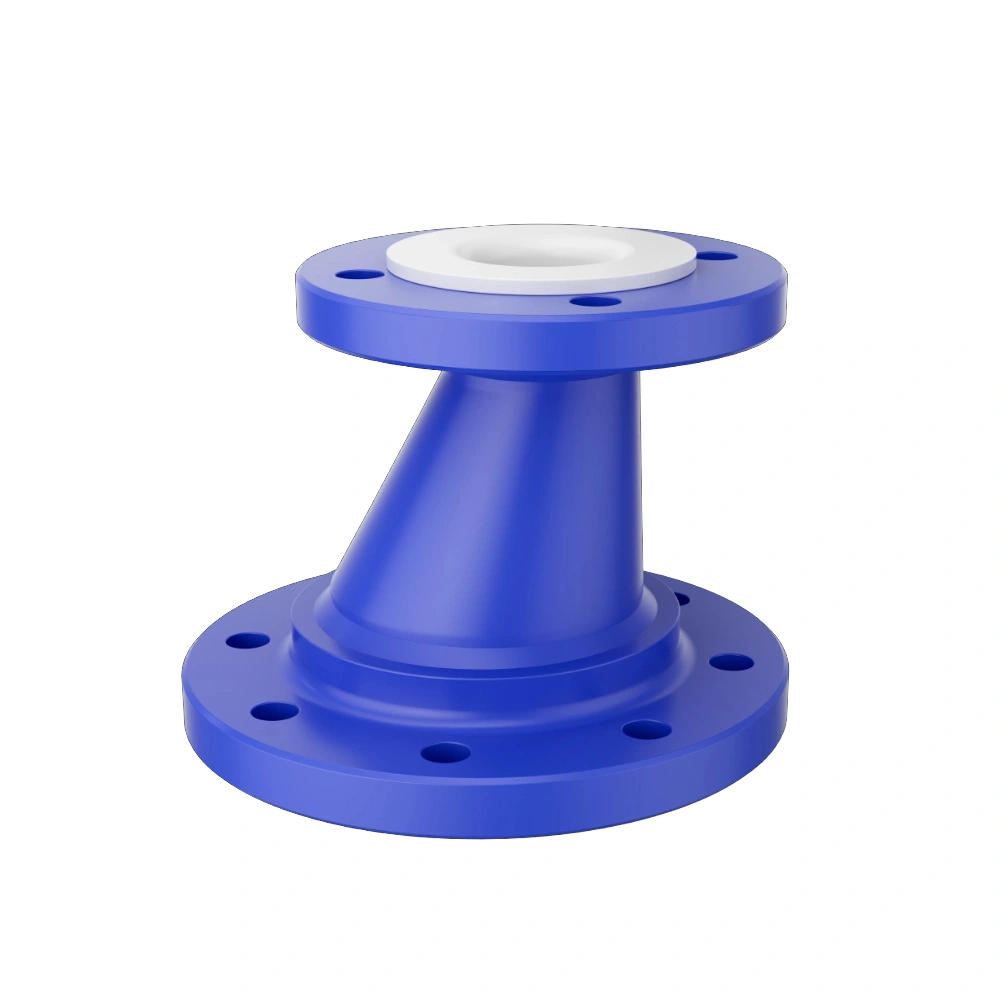


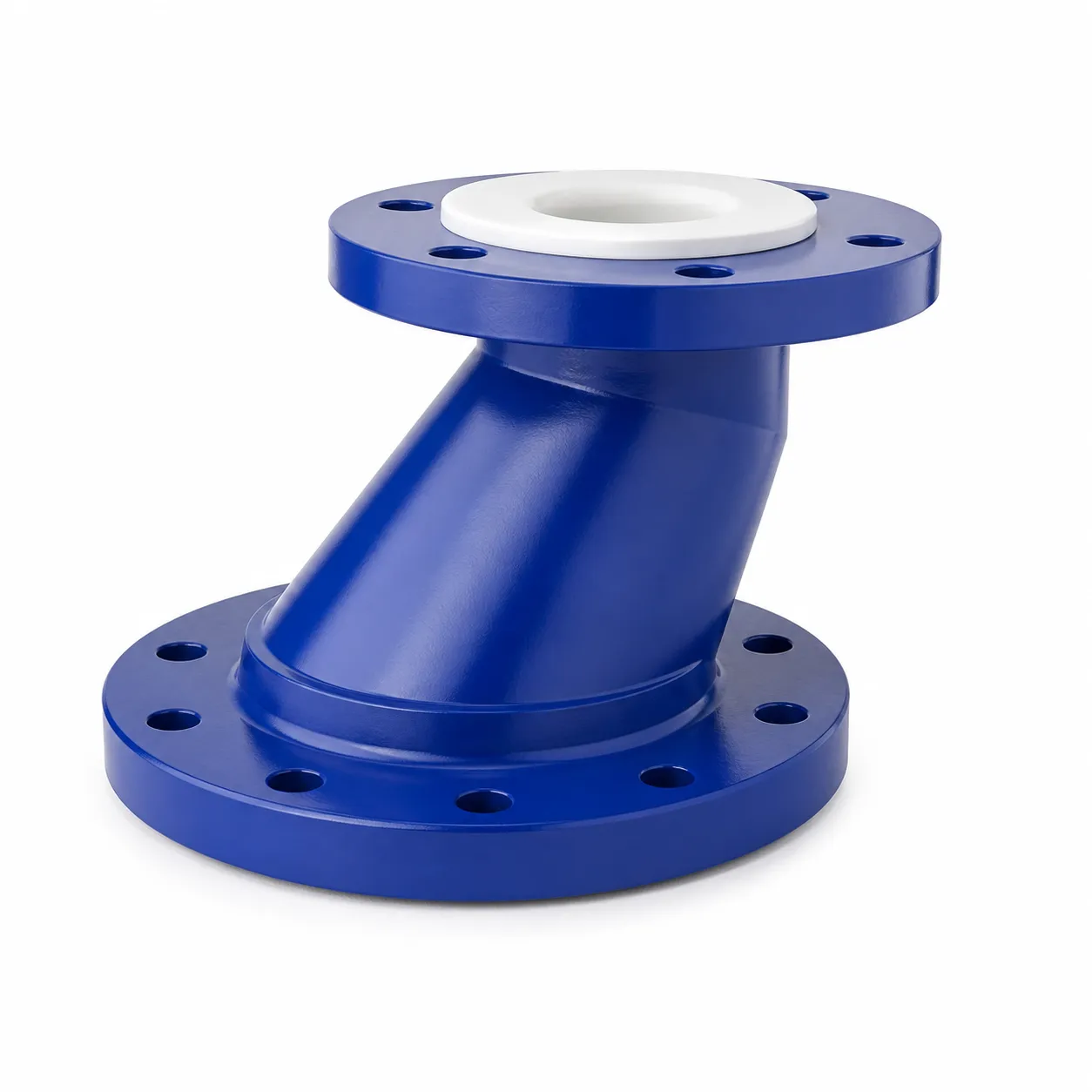
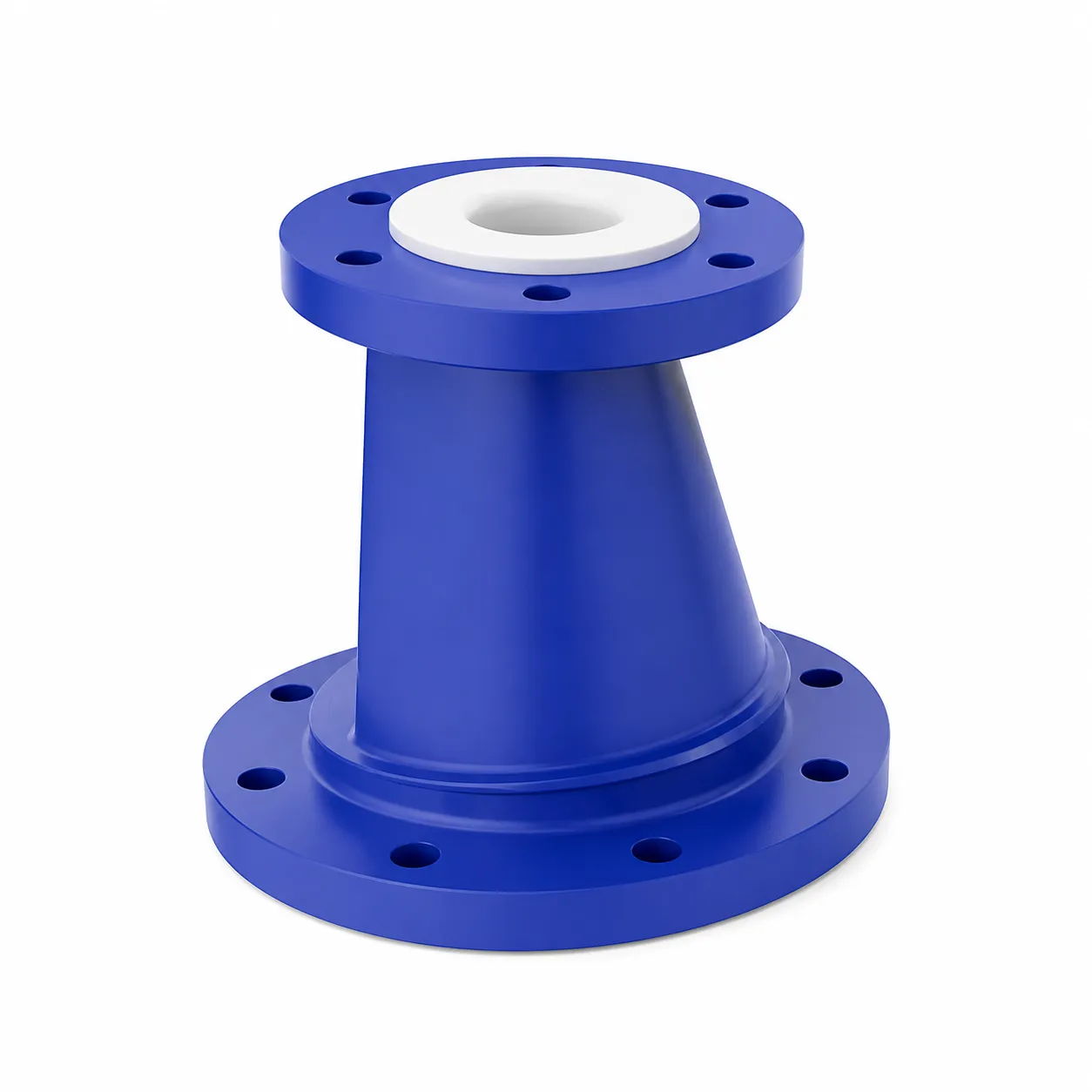
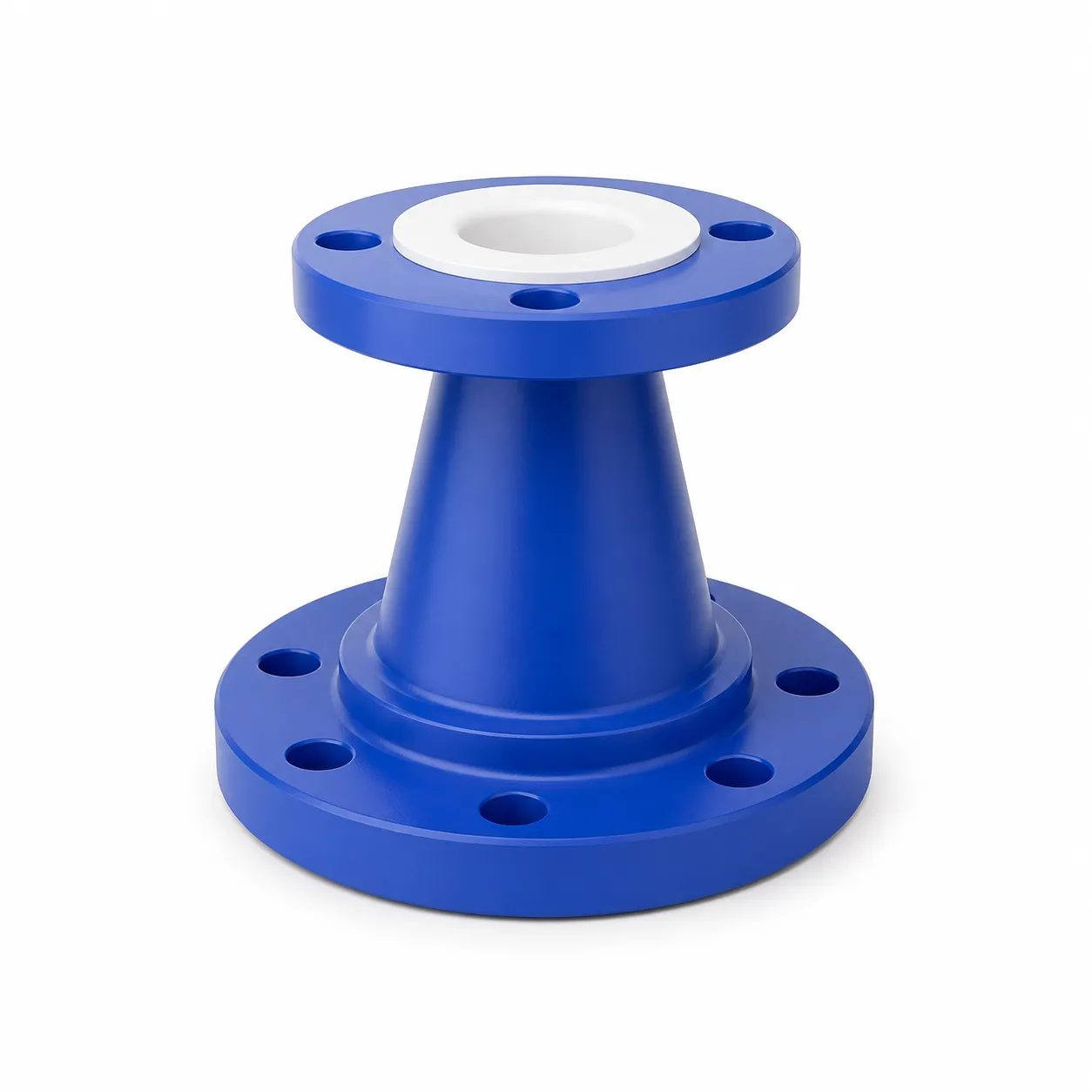
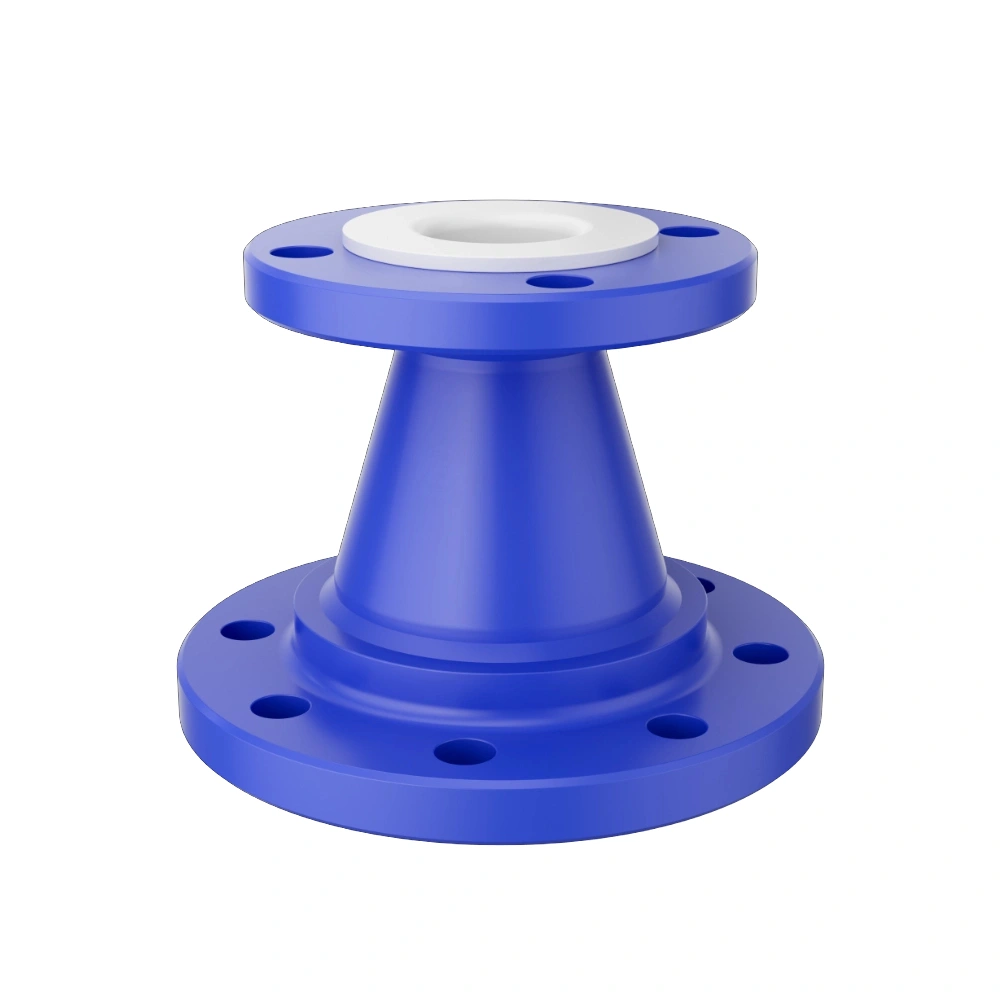
PTFE/PFA lined eccentric reducer is an asymmetric piping component designed to connect pipelines of different nominal diameters while maintaining continuous straight alignment along one side of the horizontal pipeline. Different from the concentric reducer, which gradually narrows uniformly along the shared centerline, the eccentric design shifts the center axis of the smaller opening, creating a flat edge (which can be top flat or bottom flat depending on installation requirements).
This geometric profile solves key process engineering problems in horizontal chemical pipelines:
Top Flat Mounting (Pump Suction Pipeline): When used on the horizontal pump inlet pipeline, the reducer is oriented with the flat edge facing upward. This structure prevents the formation and retention of air or gas pockets at high elevations, which may otherwise migrate into the pump impeller, causing serious cavitation, mechanical vibration, and damage to internal components.
Bottom Flat Mounting (Drainage and Slurry Pipeline): When placed with the flat edge facing downward, the reducer provides an uninterrupted bottom channel to ensure complete gravity drainage of fluids and prevent the accumulation of hazardous chemical sediments, highly reactive condensates, or thick slurries.
The outer metal structural shell bears all mechanical pipeline loads, structural bending moments, and local thermal expansion stresses. The pressure-bearing body meets the procurement standards for standard global chemical processing.
ASTM A234 WPB: Standard carbon steel grade for structural pipeline fittings, providing excellent mechanical reliability and high tensile strength.
ASTM A106 Grade B / ASTM A53 Grade B: Seamless carbon steel substrate, using thick wall parameters for standard hazardous chemical process pipelines.
ASTM A312 304/316/316L: Austenitic stainless steel option, designed for clean rooms, sterile pharmaceutical plants, or environments exposed to severe external atmospheric corrosion and offshore oxidation.
The choice of internal polymer boundary directly depends on fluid concentration, continuous temperature, and operating pressure.
Pure PTFE (Polytetrafluoroethylene): Provides complete chemical resistance over the entire pH range of 0-14. Its inherently low coefficient of friction prevents product accumulation, organic scaling, or particle crystallization along the tapered contraction section.
Melt processable PFA (perfluoroalkoxy alkane): Recommended for severe chemical operations involving frequent thermal cycling or full vacuum conditions. PFA molding ensures uniform lining thickness on complex internal slope transitions and flange surfaces.
High-density molding process: Since the eccentric reducer has a biased, inclined internal flow path, specialized automatic transfer molding or high-pressure isostatic pressing is used. This process evenly compresses the fluoropolymer matrix against the asymmetric steel body to ensure zero microporosity, uniform wall thickness, and zero stress concentration at the diameter transition.
High permeability resistance: The compressed molecular structure of the lining limits the free void space, preventing volatile chemical vapors and low molecular weight acid gases from diffusing through the lining and corroding the outer steel shell.
Vacuum integrity protection: The lining is mechanically anchored in the precisely machined internal locking groove, or stabilized by the vent holes in the outer shell to prevent the lining from collapsing, buckling, or thermally vacuuming off under negative pressure changes.
To ensure seamless integration into the international engineering procurement framework and automatic chemical manifold device, all design and testing processes comply with global compliance indicators.
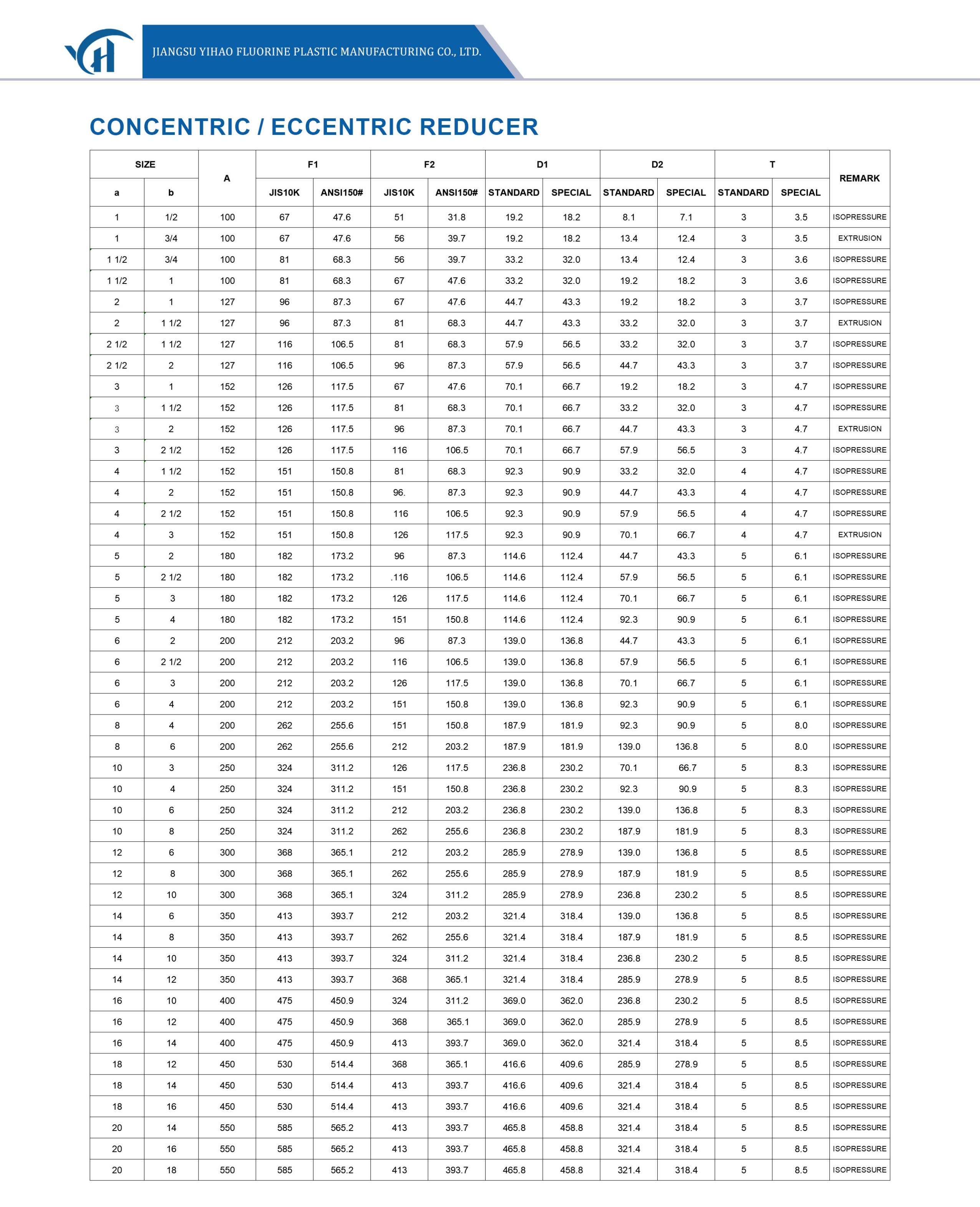
Nominal size range: DN15 to DN1200 (nominal diameter from 1/2 inch to 48 inches), supporting large and small diameter combinations.
Pressure grade compatibility: PN10, PN16 and ASME Class 150 (150LB).
Face to face size: Standard dimensions meet industry specifications, or can be customized and manufactured according to the precise project material list (MTO) and three-dimensional design drawings.
Design and fittings specifications: ASTM F1545 (Standard Specifications for Plastic Lined Ferrous Metal Pipes and Fittings).
Flange connection and size standards: ASME B16.5, EN1092-1, DIN 2501, HG/T 20592, JIS 10K.
Core dimensions of face to face connection: Compliant with ASME B16.10, GB/T 12221, or special customer layout configuration.
The asymmetric flow path structure and complete chemical isolation performance of these PTFE/PFA lined eccentric reducers make them key pipeline components in many industrial fields.
Chemical Process Industry (CPI): Horizontal chemical transmission pipelines for bulk raw acids (including concentrated sulfuric acid, hydrofluoric acid, hydrochloric acid, and nitric acid), requiring complete fluid drainage or zero air lock.
Chlor-alkali facility: Installed at the pump suction header for processing concentrated sodium hydroxide (caustic soda), wet chlorine, and highly corrosive brine filtration pipelines.
Pharmaceutical and biochemical manufacturing: High-purity process reduction point, requiring zero dead leg structure. The flat bottom orientation ensures continuous gravity drainage during the online cleaning (CIP) cycle and prevents chemical residues from being carried over.
Semiconductor and electronic chemicals supply: Connect the headers of ultra-pure electronic grade chemical etching solution and corrosive organic solvent to ensure that no micro-pollution or metal ion extraction occurs during diameter transition.
Petroleum refining and petrochemical industry: Used in hydrocarbon streams containing hydrofluoric acid alkylation units, acidic water strippers, and toxic catalyst loop systems.
Industrial wastewater and mining leaching: Horizontally arrange the conveying lines of corrosive industrial wastewater, chemical effluent treatment, and acid leaching, with the restriction of fluid accumulation.
To ensure zero leakage operation, process fluid sealing, and long-term structural alignment stability, each lined eccentric reducer undergoes strict quality control verification before leaving the factory.
Electrostatic spark test (non-destructive): Use high-voltage spark test equipment (10kV to 25kV, depending on the thickness of the lining) to conduct 100% inspection of the slope-shaped polymer lining and the surface of the large and small flanges, so as to ensure that there are absolutely no pinholes, micropores or structural cracks.
Hydrostatic pressure test: Strictly comply with the specifications of API 598, ASTM F1545, or GB/T 13927 to carry out mechanical pressure sealing verification to ensure that the sealing integrity is completely reliable under continuous service load.
Visual and dimension alignment audit: Precisely inspect the flat alignment profile, flange surface parallelism, concentricity offset, and the compliance of overall dimensions with the project MTO configuration data.