PTFE Pall Ring for Tower Packing | Teflon Pall Ring Guide
News Details
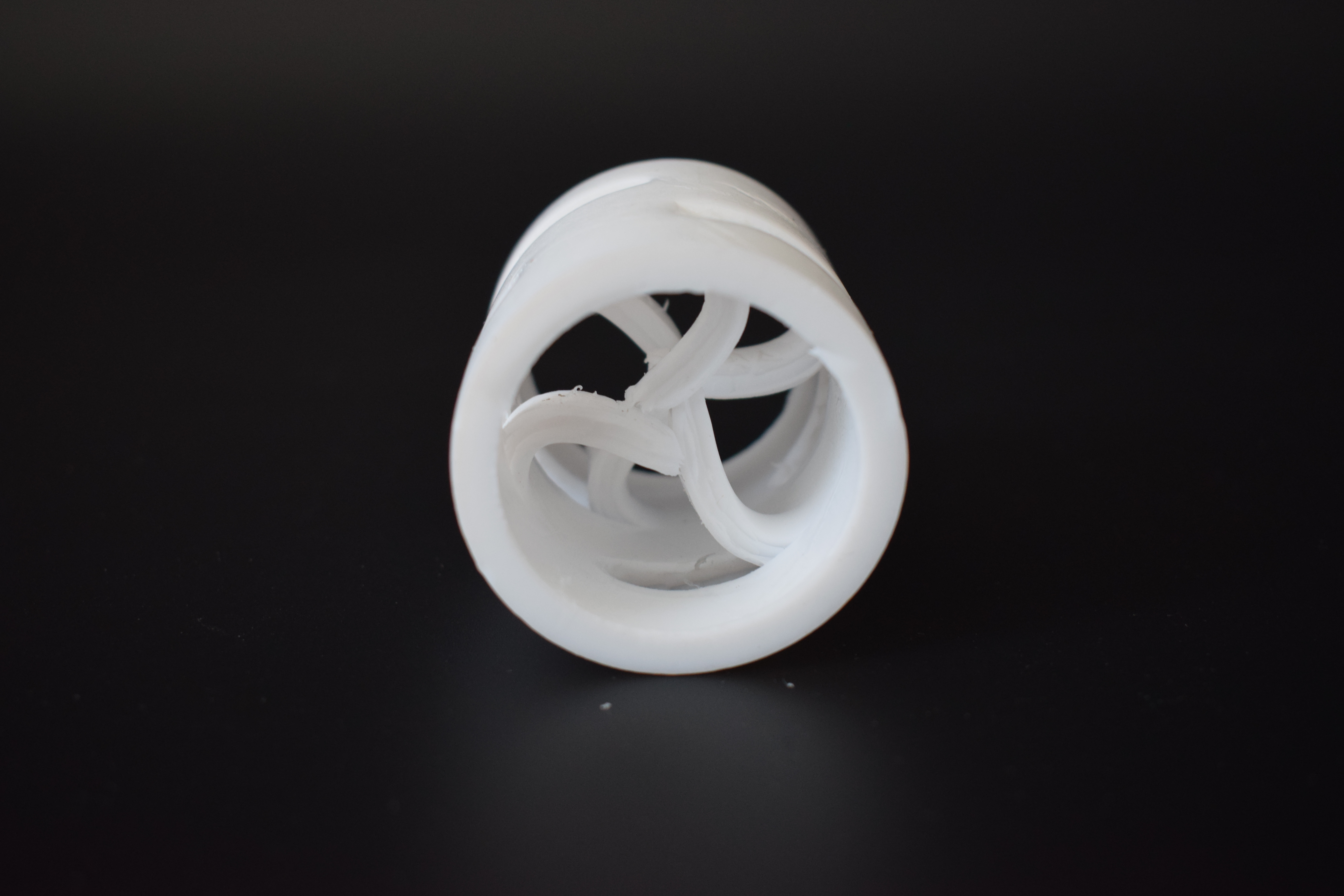
The PTFE Pall Ring features an open, cylindrical structure with internal cross-ribs and stamped windows. This geometry allows gas and liquid phases to distribute evenly across the packing bed, improving mass transfer efficiency within distillation and absorption columns. The interior ribs reinforce structural integrity while increasing total surface area without restricting fluid movement, maintaining a consistently low pressure drop during continuous operation. Constructed from pure fluoropolymer material, the ring maintains mechanical flexibility across extreme thermal ranges, from cryogenic conditions up to high operating temperatures. Its lightweight design reduces total bed weight, allowing higher packing density without overstressing internal support plates. Additionally, the open-window design promotes rapid liquid drainage through internal channels, minimizing liquid holdup and lowering the risk of column flooding. Uniform wall thickness further prevents structural deformation under heavy bed loads, extending overall packing service life.
Benefits of Teflon Pall Ring in Harsh Environments
The Teflon Pall Ring delivers full chemical inertness across the pH scale, resisting attack from concentrated acids, aggressive bases, and organic solvents. Its low surface energy creates a non-stick surface that minimizes fouling, scaling, and particulate buildup, allowing process columns to operate longer between scheduled maintenance cycles. Unlike metal alloys that suffer from pitting or chemical leaching, fluoropolymer packing prevents ionic contamination in high-purity process streams. The material remains dimensionally stable in high-temperature steam applications where standard elastomers or commodity plastics degrade. Furthermore, its resistance to thermal shock prevents structural cracking during rapid temperature fluctuations. Compared to traditional ceramic packings, the lower density simplifies installation, reduces structural load requirements on vessels, and shortens turnaround times during shutdown periods.
PTFE Pall Ring Tower Packing in Action
PTFE Pall Ring Tower Packing is widely used across chemical processing, petrochemical refining, and environmental control systems. It is commonly specified for acid gas scrubbers, gas absorption units, and corrosive distillation columns. In pharmaceutical manufacturing, the inert fluoropolymer composition eliminates product contamination risks during solvent recovery and purification processes. In environmental applications, such as air stripping and wastewater treatment, the high void fraction enables efficient removal of volatile organic compounds (VOCs) with minimal blower energy requirements. The material also complies with food-grade standards for applications requiring strict purity control. Because the reduced total packing weight minimizes structural steel requirements for tall towers, it offers distinct practical advantages in both retrofit and new plant construction projects.
Selecting the Right PTFE Pall Ring Size
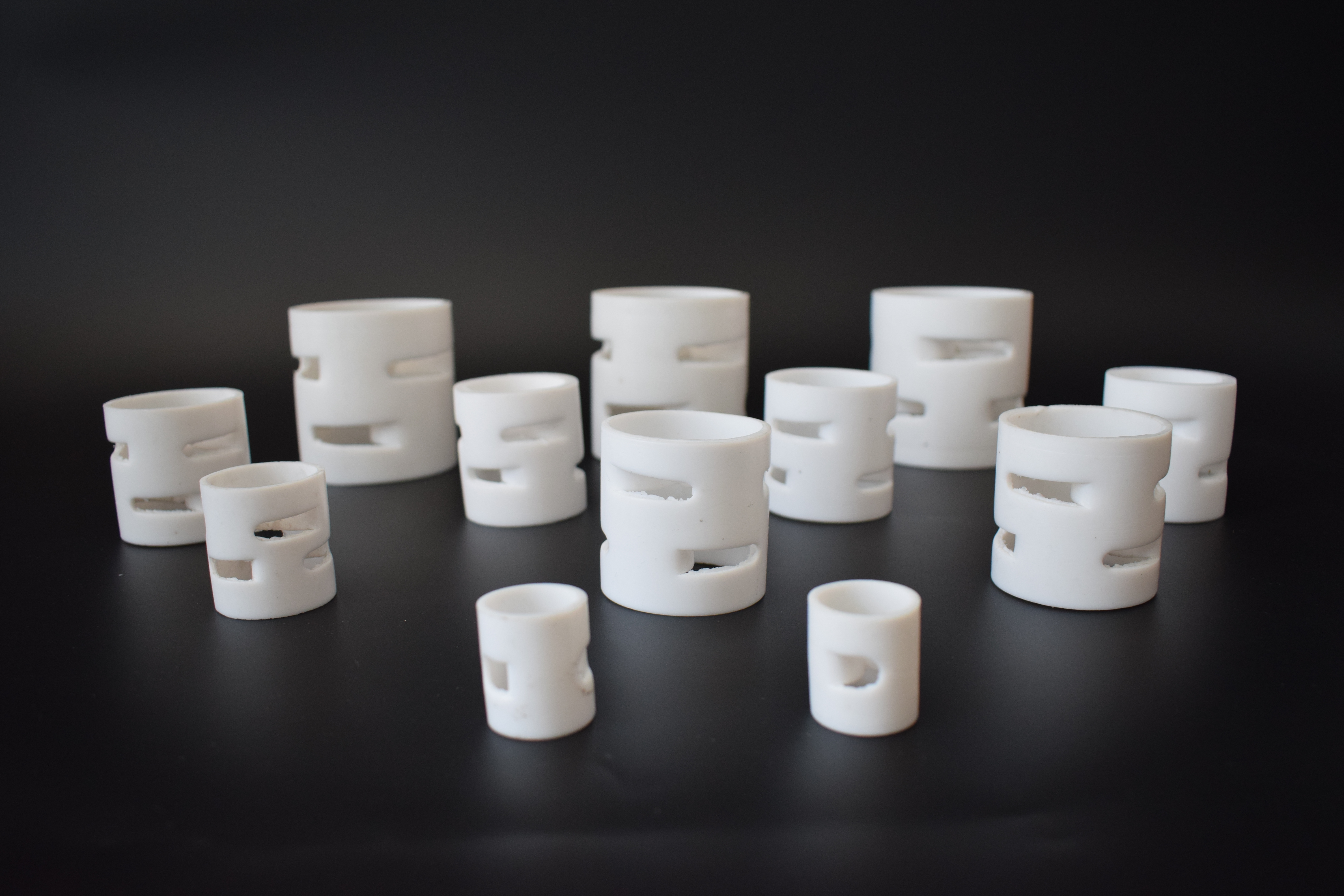
Selecting the proper ring diameter requires balancing mass transfer efficiency against pressure drop limitations. Smaller packing dimensions offer higher specific surface area for phase contact, though they increase resistance to vapor flow. Larger diameters reduce pressure drop under high vapor loads but offer slightly less contact surface area per unit volume. For most industrial column diameters, nominal ring sizes between 1 inch and 2 inches offer an optimal balance of capacity and efficiency. While mixed-size packing beds can occasionally be specified to increase contact area, proper distribution must be maintained to prevent channel flow along the vessel walls. Process engineers must verify thermal limits prior to installation; virgin PTFE operates continuously up to 260 degrees Celsius, while graphite-filled PTFE modifications are recommended for elevated thermal or load demands.