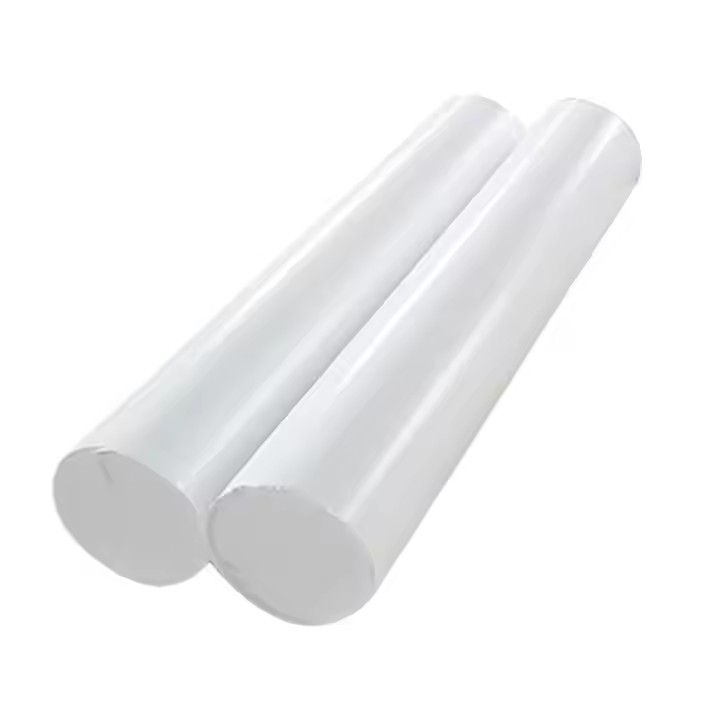
PTFE Rods: Material Selection and Application Guide for Industrial Buyers
News Details
What Makes PTFE Rods an Exceptional Engineering Material
PTFE rods have earned a reputation as one of the most dependable materials for demanding industrial environments, thanks to a unique combination of chemical inertness, thermal stability, and exceptionally low friction. A PTFE rod maintains consistent mechanical properties across extreme temperature ranges and corrosive chemical exposures where many engineering plastics fail. This reliability makes them a default specification for industries ranging from chemical processing to semiconductor fabrication, where material failure carries unacceptable operational and safety risks. The molecular architecture of a PTFE rod features densely packed fluorine atoms forming a protective sheath around the carbon backbone, which explains both its remarkable chemical resistance and its non-stick surface characteristics. Practically speaking, components machined from PTFE rods can handle concentrated acids, strong alkalis, and aggressive organic solvents without swelling, softening, or leaching contaminants into process streams. These attributes directly translate into longer maintenance intervals and reduced replacement part inventories for plant operators managing continuous production environments.
Critical Industrial Applications Driving PTFE Rod Demand
The chemical processing sector consumes a significant share of PTFE rod production because the material's inertness directly addresses the industry's most persistent challenge: corrosion management. Valve seats, gasket rings, and pump shaft sleeves fabricated from PTFE rods resist attack from hydrochloric acid, sodium hydroxide, and chlorinated solvents that would rapidly destroy metallic alternatives. Reliability engineers increasingly specify PTFE rods for these critical wear components based on failure statistics demonstrating substantially lower incident rates compared to alloy-based solutions. Semiconductor manufacturing represents a high-growth application area where the purity characteristics of PTFE rods deliver measurable yield improvements on advanced fabrication lines. Wafer handling components and chemical delivery manifolds must operate without shedding particles or leaching ionic contaminants that could destroy microscopic circuit features. Food processing and pharmaceutical production present equally compelling use cases, as PTFE rods machined into scraper blades and guide rails resist aggressive sanitation procedures involving steam and oxidizing disinfectants while maintaining full dimensional stability.
Molded PTFE Rods vs. Extruded PTFE Rods: Manufacturing and Performance
When evaluating suppliers, buyers should recognize that molded PTFE rods and extruded PTFE rods represent two distinct manufacturing routes with different cost structures and performance profiles. Molded PTFE rods are produced by compressing granular resin in cylindrical molds under high pressure, followed by a carefully controlled sintering cycle that fuses the particles into a homogeneous solid with isotropic mechanical properties. This compression molding approach excels at producing large-diameter rods, making molded PTFE rods the preferred choice for heavy-wall bushings and structural spacers requiring uniform strength in all directions. Extruded PTFE rods rely on a continuous process where resin is forced through a heated die, yielding long lengths with consistent cross-sectional geometry and excellent surface finish at lower per-unit costs for standard diameters. The extrusion method delivers superior dimensional uniformity across production batches, which explains why extruded PTFE rods dominate high-volume applications such as insulators and small-diameter bushings. Quality verification protocols for both types extend beyond basic dimensional checks to include density measurement, tensile strength testing, and traceability documentation covering raw material origins and process parameters.
Building a Reliable Supply Chain for PTFE Rods
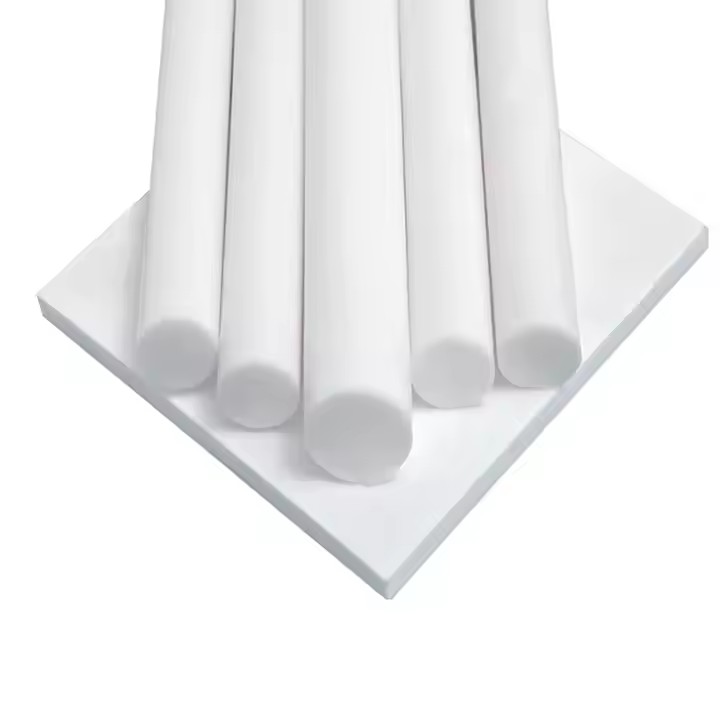
Building a resilient supply base for PTFE rods requires looking beyond unit price to evaluate production capacity, geographic diversification, and technical support capabilities. Many procurement organizations find that maintaining relationships with multiple qualified manufacturers across different regions provides meaningful insurance against logistics disruptions and raw material shortages. A supplier portfolio that includes both specialized producers and larger diversified manufacturers offers flexibility in matching order volumes to the most appropriate production partner. The global market for PTFE rods continues to mature as manufacturing technology becomes more widely accessible and quality standards converge across regions. While established industrial economies maintain strong positions in high-end applications requiring extensive certification, emerging production centers have narrowed the capability gap considerably through sustained investment in modern extrusion lines and compression molding equipment. Forward-looking procurement strategies that evaluate suppliers based on objective quality metrics rather than geographic assumptions consistently uncover significant total-cost advantages over multi-year engagement periods.