PTFE Lined Pipe Coating & Adhesion Testing - Part 1
News Details
Introduction: Why Exterior Paint Matters
When buyers search for high-quality PTFE lined pipes and ptfe lined pipe fittings, the focus is almost always on the inside. Everyone knows that the inner fluoropolymer (PTFE) layer acts as an invincible shield against strong acids, harsh alkalis, and toxic chemicals.
However, there is an equally important question that many project engineers forget: What protects the outside steel pipe?
In typical chemical processing plants, fertilizer factories, and ocean ports, the surrounding air is extremely harsh. It is filled with atmospheric moisture, high humidity, salt spray, and subtle acid vapors. If the outer steel pipe is not properly protected, it will begin to rust from the outside. Over time, severe exterior corrosion can destroy the steel shell, forcing an expensive plant shutdown—even if the inner PTFE lining is still perfectly intact.
To prevent this from happening, every batch of PTFE lined pipe manufactured in our facility undergoes a strict, multi-step coating test process. Here is a clear, step-by-step look at how we ensure your pipes stay protected inside and out.
Step 1: Surface Preparation (Creating the "Velcro Effect")
Have you ever tried sticking standard sticky tape onto a completely smooth sheet of glass? It peels off with almost zero effort. But if you stick that same tape onto a slightly rough fabric, it grips tightly.
The exact same rule applies to painting steel pipes. You cannot simply spray liquid paint onto a smooth carbon steel tube and expect it to stay attached for 10 or 15 years.
-
Abrasive Sandblasting: Before any paint touches the metal, raw steel pipes are blasted with tiny high-speed abrasive particles. This process instantly blasts away all mill scale, dark oxidation, dirt, and microscopic rust spots.
-
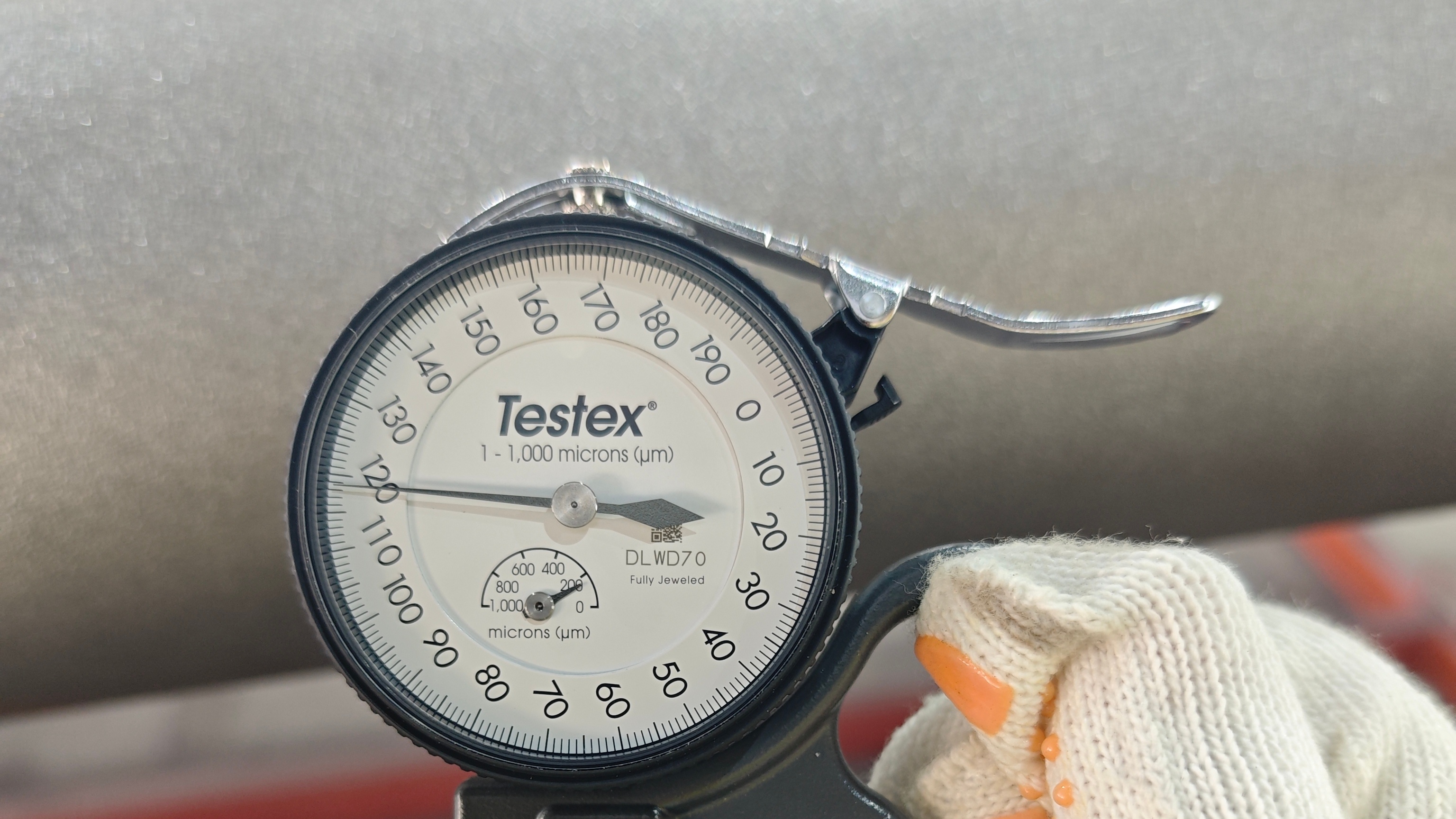
Measuring Surface Profile: After blasting, our Quality Assurance (QA) inspectors use specialized Testex Replica Tape pressed against the metal surface, measured with a precision thickness gauge.
-
The Goal: We make sure the steel surface achieves a controlled, uniform micro-roughness. These micro-grooves act like tiny mechanical "hooks" (just like Velcro) that allow the first layer of paint to bite deep into the metal.
Step 2: The Laboratory Pull-Off Adhesion Test
How can we be 100% sure that the paint won't flake off when your workers install the pipes on-site, or when the pipes experience extreme temperature changes in summer and winter?
We test it in our lab using a destructive pull-off test method!
-
Setting Up the Test: Along with your actual production pipes, we prepare matching steel test plates that go through the exact same sandblasting and painting process.
-
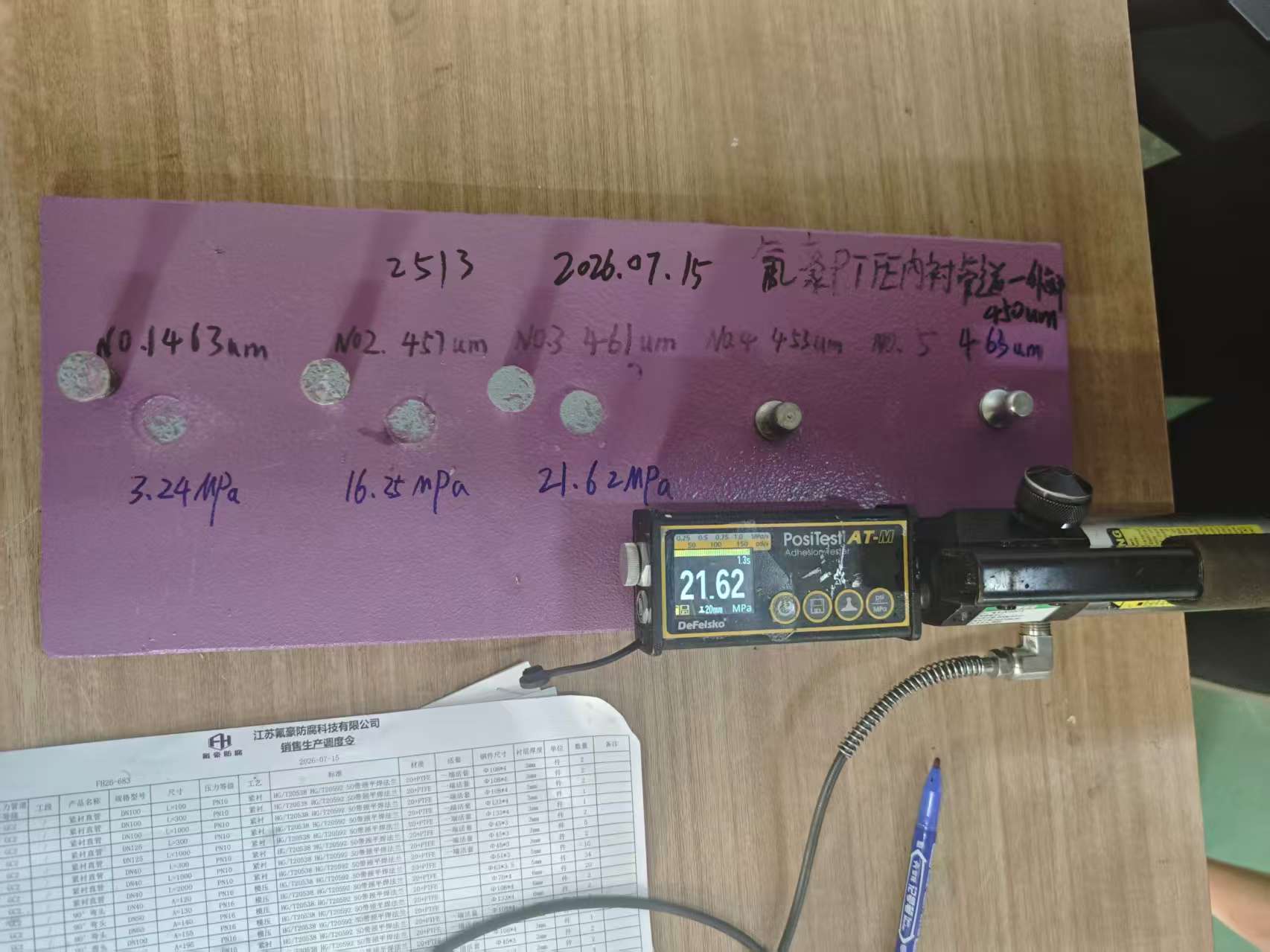
Gluing the Studs: Small round metal studs (called dollies) are glued firmly onto the painted test plate using high-strength industrial epoxy. We let the glue cure completely until it is rock solid.
-
The Pull Test: Our QA technician attaches a specialized hydraulic tool (a PosiTest Adhesion Tester) to the metal stud and slowly cranks up the pulling force straight upward.
-
The Result: The machine measures the exact amount of force needed to rip the paint off the steel. While standard commercial painting might pull off at lower pressures, our high-performance coatings hold strong up to 20 MPa or higher. That means it takes an immense amount of force before the bond even thinks about breaking.
Step 3: Measuring Dry Film Thickness (DFT)
If a paint layer is applied too thinly, oxygen and moisture can slowly seep through microscopic pinholes over time, causing hidden rust underneath the paint. On the other hand, if paint is applied too thickly in a single coat, it can crack as it dries. Finding the exact right balance is crucial.
-
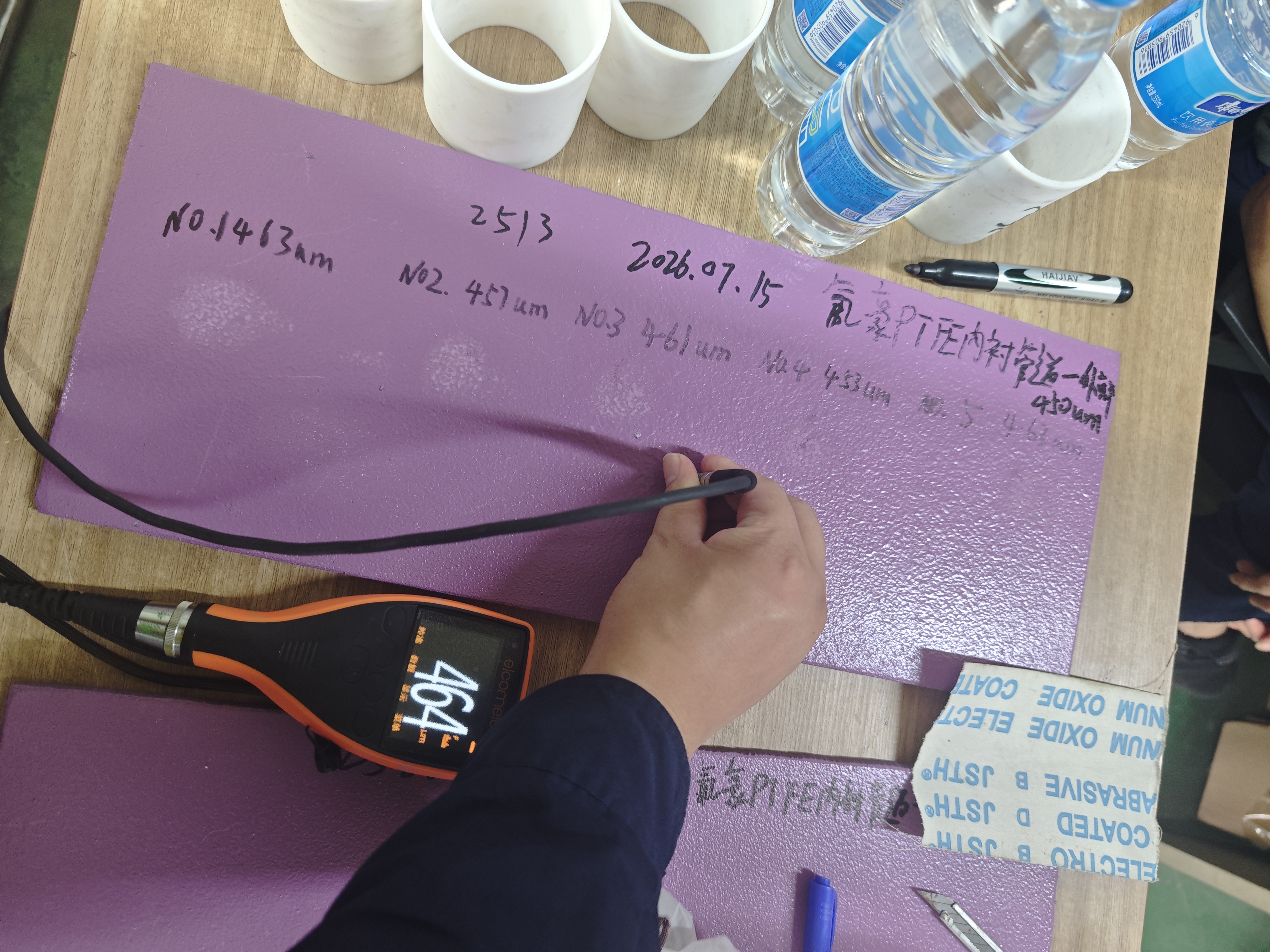
Digital Gauge Checks: Inspectors use a handheld digital magnetic meter (such as an Elcometer digital gauge) to test paint thickness at dozens of different points across the pipe body, flange necks, and welding joints.
-
Consistent Target Range: For heavy-duty chemical plant environments, we maintain a total dry film thickness around 400 to 460 microns.
-
Full Coverage Guarantee: By testing multiple spots on every single spool, we guarantee there are zero "thin spots" left exposed to atmospheric corrosion.
Practical Benefits for Procurement Managers
By enforcing these rigorous laboratory and factory tests, we deliver tangible benefits for your project timeline and budget:
-
Zero Unexpected Maintenance: You won't have to send painting crews up scaffolding to repaint rusted exterior pipes every two years.
-
Matching Service Life: The exterior steel protection is built to match the long, dependable lifespan of the internal PTFE lining.
-
Full Quality Traceability: Every test result—from surface profile depth to final paint thickness—is documented and attached to your batch inspection certificates.
What Comes Next?
Testing the paint thickness and adhesion is only half of the story. Once the paint dries completely, how do we protect these heavy spools during sea transit so they arrive at your job site without a single scratch?
Read Part 2 to discover our final coating checks, flange sealing protection, and international export packaging workflows!


